We think Amazon Quick is one of the more interesting enterprise AI assistants we have tested because it feels designed as a real workplace system rather than just a chatbot with extra branding. The account setup is straightforward if you already have an AWS-linked workflow, and the product makes a strong first impression with a cleaner, more approachable interface than some of the more technical AI tools in the market.
The biggest strength is how much Amazon Quick tries to expose work context directly inside the product. It offers more visible connectors than Claude in our testing, supports artifacts in a way that feels familiar to Claude users, and includes built-in views for things like memory and a knowledge graph. That last part is especially useful because it makes the system feel less opaque. Instead of treating memory like a hidden backend feature, Amazon Quick lets you inspect more of the structure from inside the app itself.
We also found the product generally pleasant to use. In simple design-generation testing, we asked Amazon Quick to create a lightweight web app concept using Next.js and Framer Motion. The output was decent and usable, even if it did not reach the same quality level we would expect from Claude on the same task. Still, for a free-tier experience, the result was solid enough that we would not dismiss it. The interface also feels more user-friendly than both Claude and Codex for non-technical day-to-day use.
For reference, we saved one of the generated design samples here: Open the sample HTML output
Another positive is efficiency. Based on our testing, Amazon Quick appeared to use noticeably fewer tokens than Claude Opus 4.7 for similar tasks, which could matter for teams trying to balance capability with cost. The downside is that Amazon does not make the underlying model especially transparent. Instead of clearly showing the exact model, the product emphasizes operating modes like Fast, Balance, and Smart, along with configurable thinking levels such as Low, Medium, and High. That abstraction may help mainstream users, but it gives advanced users less visibility into what they are actually running.
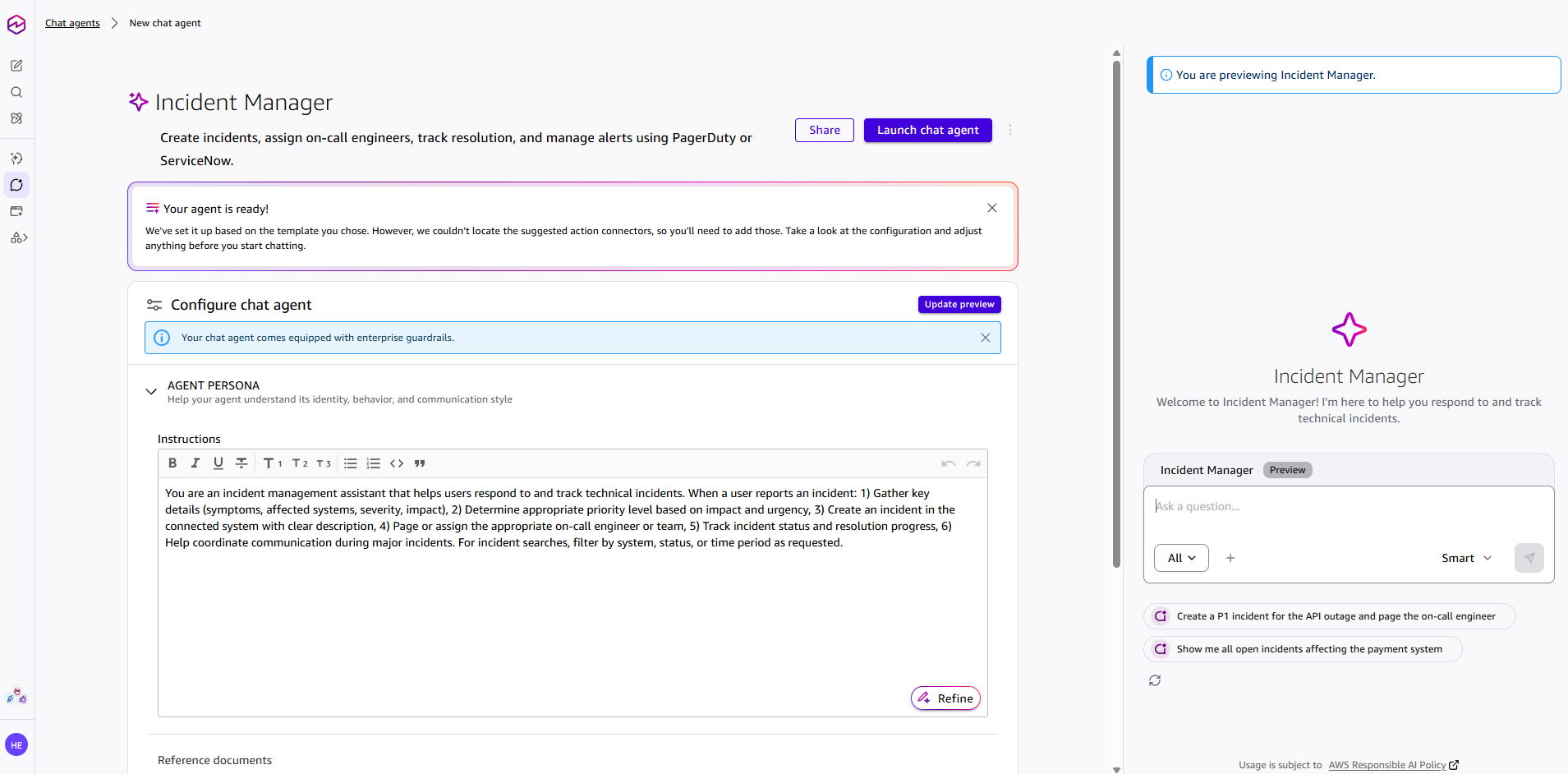
Amazon Quick also has multiple built-in chat agents on the web app, which helps it feel more like an agent platform than a single assistant. The built-in templates make it easier to picture team and departmental use cases, especially for operations-heavy or support-heavy workflows.
The main weakness is remote control. Unlike Claude Code or OpenClaw-based setups, Amazon Quick does not give us a clear path to control the system remotely through mobile-friendly external channels like Telegram, WhatsApp, or Discord. That limits its usefulness for users who want a persistent agent they can drive from outside the desktop environment. In other words, Amazon Quick feels strong as a workplace assistant inside its own product boundary, but weaker as a flexible agent you can route through your own broader automation stack.
Strengths: More visible connectors than Claude, cleaner and more user-friendly interface, built-in memory and knowledge-graph visibility, artifact support, lower apparent token usage than Claude Opus 4.7 in our testing, multiple built-in chat agents, strong enterprise assistant positioning.
Weaknesses: No remote-control mode through external messaging channels, weaker design-generation output than Claude in our test, limited transparency about the exact underlying model, and some enterprise-style abstraction that may frustrate power users.
Final verdict: Amazon Quick feels like a serious contender in the agentic workplace AI category. We do not think it beats Claude on pure output quality in every case, but it is easier to use than Claude and Codex in some day-to-day scenarios, and its visibility into memory, graph structure, and enterprise context makes it stand out. If Amazon expands flexibility and remote-control options, this could become one of the strongest enterprise AI assistants in the market. Even now, we think it is already one of the better agentic AI products outside Claude and Codex.