Anthropic is facing a privacy scare after users found that some publicly shared Claude chats and artifacts were discoverable through search engines.
The important distinction is this: available reporting does not show that attackers broke into Claude accounts or stole ordinary private chats. The exposed pages were created through Claude's own sharing and publishing features. But once those links existed on the open web, search engines could surface them to people who were never sent the link directly.
That makes this less a classic "data breach" and more a product-design failure around public AI conversations. For users, the difference may not feel comforting.
What Happened
404 Media reported on July 27 that Claude users' public share links were appearing in Google search results. Other outlets, including WIRED, Axios, Cybersecurity News, HackRead, and Neowin, then confirmed the broader pattern: searches such as site:claude.ai/share had surfaced shared Claude conversations, and some Claude-created artifacts were also discoverable.
The reports describe a mix of material: legal questions, technical work, business documents, infrastructure diagrams, personal discussions, and user-created apps or documents. Some reports also mention claims about credentials or cryptocurrency-related material, but not every sensitive example has been independently verified.
Axios said that by Monday afternoon it could still find indexed Claude artifacts in Google, but not the chat conversations themselves. WIRED reported that Google results for the direct Claude share query had stopped appearing, while Bing still showed results at the time WIRED checked.
Why The Links Became Searchable
Claude chats are private by default. Anthropic's help center says a user can create a shareable chat snapshot from the Share menu, and that anyone with the resulting link can view the messages included in that snapshot. Messages sent after the snapshot remain private unless the user updates or re-shares it.
Claude artifacts follow a similar split. For Free, Pro, and Max users, publishing an artifact makes it publicly available to anyone with the link. For Team and Enterprise accounts, artifact sharing is restricted inside the organization.
The privacy problem is the gap between "public link" and "search-indexed public page." Users often understand "anyone with the link" as a limited sharing model, like sending a document URL to one colleague. Search indexing changes the audience. If the link is posted to a public forum, social platform, website, or another crawlable place, a search engine may discover it.
Anthropic told Axios that it does not provide chat directories or sitemaps to search engines, and that shareable links are not guessable or discoverable unless people share them. The company also said public links may be archived by third-party services once they are shared publicly.
That explanation may be technically true, but it leaves a hard product question: should AI chat exports ever be indexable by default?
The Robots.txt Problem
Claude's current robots.txt file disallows /share/* for general crawlers. That sounds like a fix, but robots.txt is not a privacy boundary.
Google's own Search Central documentation is explicit: robots.txt is mainly a crawler-access instruction, not a mechanism for keeping a web page out of Google. Google says a page blocked by robots.txt can still appear in search results if other pages link to it. To prevent indexing, Google recommends a noindex meta tag or an X-Robots-Tag response header, or a real access barrier such as password protection.
WIRED said it reviewed exposed Claude chat pages and found they did not include a noindex tag. That is the core technical failure being reported: Anthropic appears to have relied on crawler disallow rules for pages that users reasonably expected to behave more like private share links.
Why This Matters More For AI Chats
AI conversations are unusually sensitive documents.
A shared Claude chat can include the user's prompt, Claude's response, generated artifacts, pasted code, summaries of uploaded documents, legal analysis, medical questions, financial planning, internal strategy, or personal identity details. Even if uploaded files themselves are not included in a shared chat snapshot, Claude's visible discussion of those files may still reveal private information.
That makes AI share links riskier than ordinary web links. Users do not just share a final document; they may accidentally share the messy working context that produced it.
The incident also echoes earlier chatbot-sharing mistakes. Google Bard, later Gemini, had public shared conversations appear in Google Search in 2023. OpenAI also faced criticism after shared ChatGPT conversations appeared in search results. The pattern is now clear across the industry: generative AI products keep adding publishing features faster than users understand the visibility model.
What Claude Users Should Do
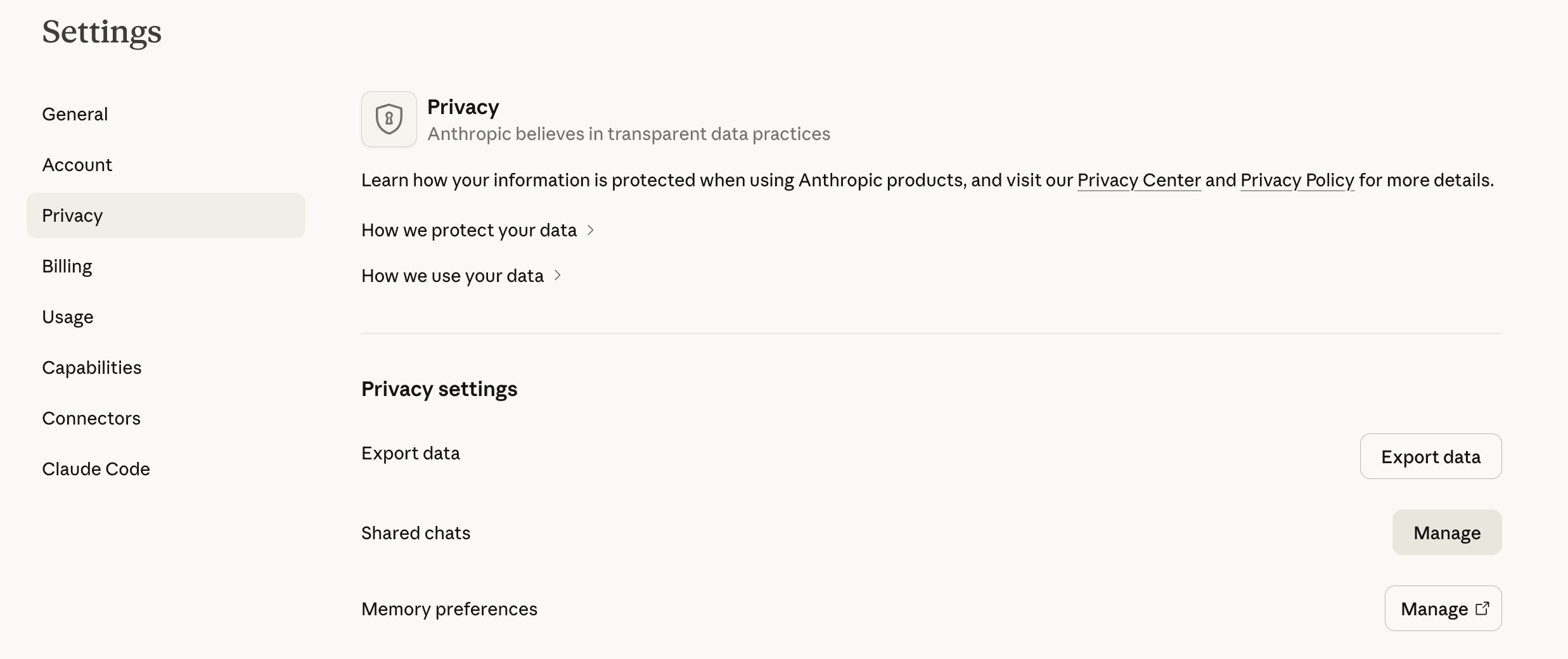
Claude users should review their shared chats immediately:
- Open Claude settings.
- Go to Privacy.
- Use the Shared chats manager.
- Unshare anything that contains personal, legal, financial, business, code, credential, client, or medical information.
For artifacts, users should separately review anything they have published. Anthropic's artifact help page says published artifacts on Free, Pro, and Max plans are publicly available, while Team and Enterprise sharing is organization-scoped.
Unsharing or unpublishing can stop future access through the original link, but it cannot guarantee that search caches, archives, screenshots, or saved copies disappear.
Our Take
Calling this "Anthropic leaked Claude chats" is emotionally understandable, but technically incomplete. The stronger framing is that Anthropic gave users a public sharing feature whose consequences were too easy to misunderstand.
The fix should not rely on users becoming search-indexing experts. AI products should treat shared chats like sensitive documents by default: clear public warnings, prominent shared-content dashboards, easy bulk revocation, noindex on share pages, short-lived links where appropriate, and organization-level controls for teams.
The lesson for builders is simple. In AI software, sharing is a security feature. If a product creates a public URL for a conversation, artifact, file summary, or generated app, the platform has to assume that URL may travel far beyond the intended recipient.
For Claude users, the rule is even simpler: if you would not publish it on a website, do not put it in a public AI share link.